Neil DeGrasse Net Worth 2026: Income & Career Insights
Neil DeGrasse Net Worth reflects earnings from books, media, and science leadership. See how his career shapes income in 2026.
Author:Chloe AndersonApr 12, 20264.5K Shares70.7K Views
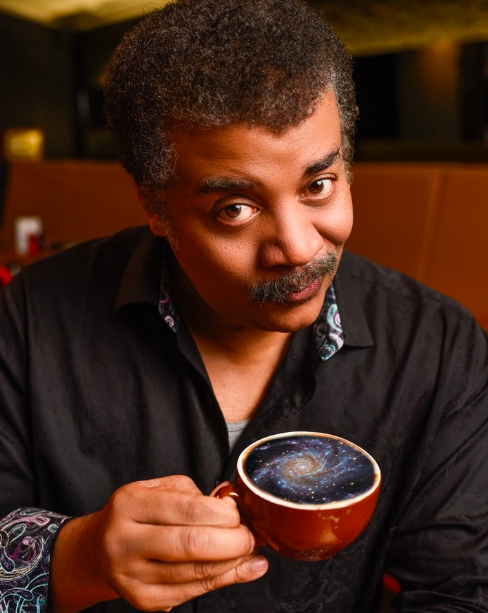
Neil deGrasse Tyson was born on October 5, 1958, in New York City. He grew up in the Bronx borough of the city. Tyson’s parents were Cyril deGrasse Tyson and Sunchita Maria (née Feliciano) Tyson. His father worked as a sociologist and city official (including a human resources post in New York City government) and his mother was a gerontologist.
Tyson attended public schools in New York City and excelled academically. He went to the Bronx High School of Science and graduated in 1976. Even in childhood he was fascinated by astronomy. At age nine he visited the Hayden Planetarium at the American Museum of Natural History, which gave him his first taste of stargazing.
He later took astronomy classes at the planetarium and acquired his own telescope for observing the sky. As a teenager he often watched the stars from the roof of his apartment building.
| Fact | Details |
| Net Worth (2026) | Not publicly disclosed |
| Income Sources | Books, TV, speaking, director role |
| Current Role | Director, Hayden Planetarium |
| Profession | Astrophysicist, science communicator |
| Education | Harvard, UT Austin, Columbia (PhD) |
| Known For | Cosmos, StarTalk |
| Research Focus | Milky Way, stars, galaxies |
| Books | Bestselling science author |
| Awards | NASA medal, NAS Public Welfare |
| Influence | Leading global science voice |
Early Career In Astrophysics And Academic Foundations
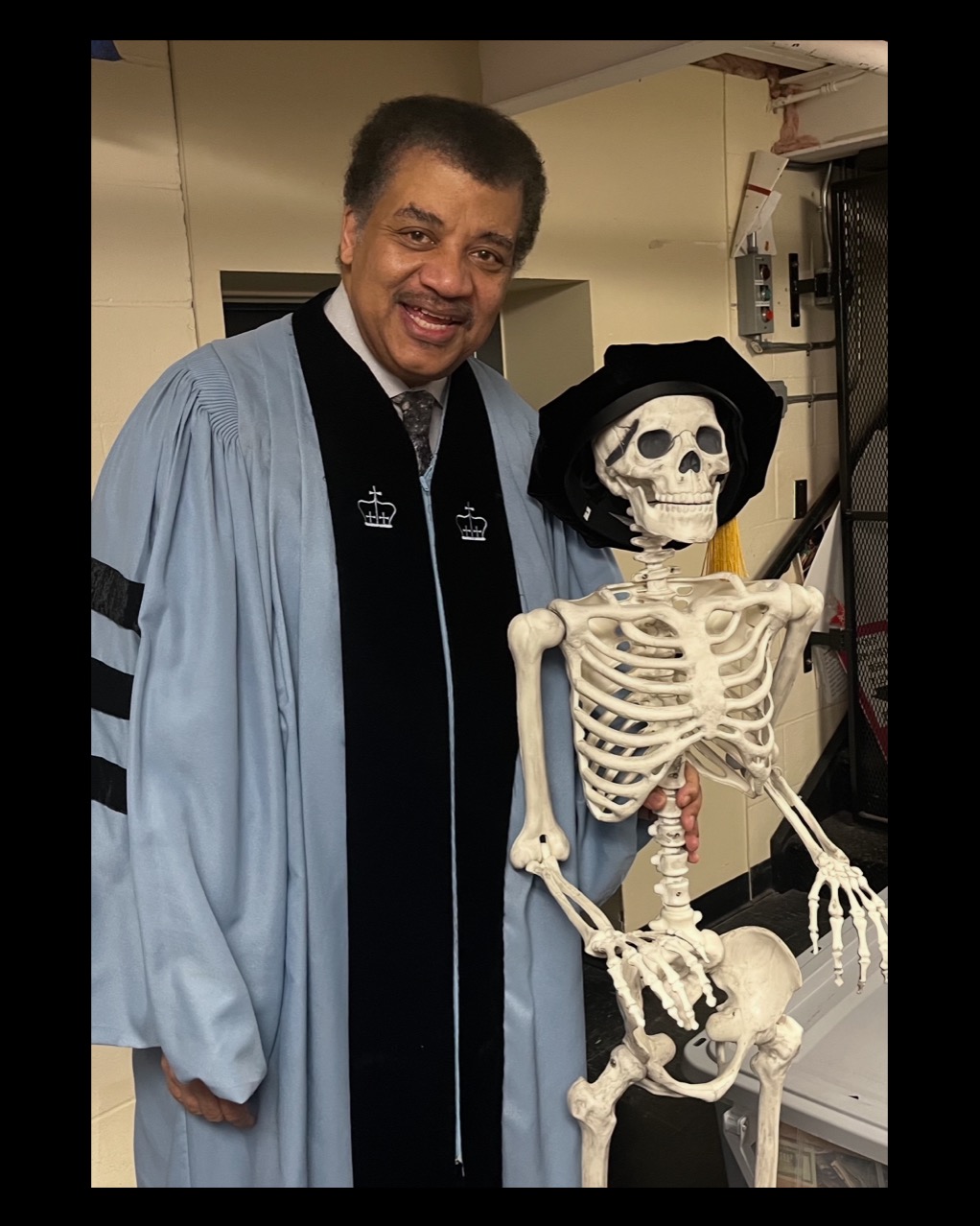
Neil deGrasse Tyson received his formal education at leading institutions. He earned a Bachelor’s degree in physics from Harvard University in 1980, followed by a Master’s in astronomy at the University of Texas at Austin (1983), and both a Master of Philosophy (1989) and a PhD in astrophysics (1991) from Columbia University.
His doctoral research focused on the chemical evolution and structure of the Milky Way’s galactic bulge. Before completing his doctorate, Tyson spent a year as a lecturer at the University of Maryland in 1987.
After his PhD, he conducted postdoctoral research at Princeton University (1991–1994) on galactic structure and evolution, laying a strong research foundation that would support his later work.
How Neil DeGrasse Tyson Built His Career In Science
Upon completing his postdoctoral work, Tyson began a dual trajectory in research and institutional leadership. He joined the Hayden Planetarium at the American Museum of Natural History as a staff scientist in 1994, while simultaneously holding a visiting research scientist position at Princeton through 2003.
In June 1995 he was named acting director of the Hayden Planetarium, and in 1996 he became its full-time director, a post he continues to hold. During the late 1990s he took on major projects: he served as project scientist overseeing the $210-million renovation of the Hayden Planetarium (the Rose Center for Earth and Space) from 1997 to 2000.
He also founded the museum’s new Department of Astrophysics (serving as chair from 1997–1999). Throughout this period Tyson also contributed to national space policy, serving on two presidential commissions (in 2001 and 2004) that guided U.S. aerospace and exploration strategy. He later joined NASA’s Advisory Council in 2006. In these ways he built a career that blended scientific research, museum leadership, and public service in space science.
His Role As Director Of The Hayden Planetarium
As Director (the first Frederick P. Rose Director of the Hayden Planetarium), Tyson has overseen the planetarium’s scientific mission and public programming. He led the transformation of the planetarium in the late 1990s, culminating in the opening of the new Rose Center in 2000 with advanced exhibition spaces and a 90-foot domed theatre.
Under his guidance the solar system exhibits were redesigned with modern classifications (for example, he had long advocated treating Pluto as a dwarf planet). In his day-to-day role he manages a team that produces the planetarium’s live space shows and educational events.
He continues his own astronomy research alongside these responsibilities. Tyson’s leadership has made the Hayden Planetarium a world-renowned centre for astronomy outreach. He remains its senior scientist and public face, responsible for both visionary planning and the institution’s ongoing scientific programs.
Contributions To Astrophysics And Scientific Research
Although best known to the public as a science communicator, Tyson has substantive research credentials. Early in his career he co-authored peer-reviewed papers on topics like starburst activity in dwarf galaxies, photometry of globular clusters, and supernova light curves.
His professional research interests include star formation, exploding stars and supernovae, dwarf galaxies, and the structure of the Milky Way. For many years he has worked with observational data from the Hubble Space Telescope and ground-based observatories to probe galactic structure and evolution.
While at the museum he also taught the first graduate-level astrophysics course at AMNH and helped establish its Astrophysics Department. These activities reflect Tyson’s commitment to advancing astrophysical research as well as public education.
Rise As A Leading Science Communicator And Public Figure
Tyson’s career took a high-profile turn as he began translating science for general audiences. He became a popular essayist for Natural Historymagazine, writing a monthly column called “Universe” from 1995 to 2005.
In 2004 he hosted the four-part PBS series Origins: Fourteen Billion Years of Cosmic Evolution, and in 2006–2011 he was the on-camera host and executive producer of NOVA ScienceNOW(PBS). In 2009 Tyson launched StarTalk, an NSF-funded radio talk show combining science with pop culture.
StarTalklater became a podcast and a television series on National Geographic. In 2014 he served as executive producer and host of Cosmos: A Spacetime Odyssey, a continuation of Carl Sagan’s landmark TV series.
He frequently appears on national talk shows (for example The Daily Showand others) and at public lectures. In all these roles Tyson emphasizes his mission to make science accessible – as he has said, he strives to “bring the universe down to Earth” for everyday audiences.
He has also taken leadership positions in science outreach organizations, serving as a long-time member (and now Chairman) of the Planetary Society’s board. These efforts have made him one of the most recognised science communicators of his generation.
Books, Media Appearances, And Educational Impact
Tyson has written extensively for the public, authoring and co-authoring numerous science books that have sold widely. His works range from memoir (The Sky Is Not the Limit, 2000) to collections of essays (Death by Black Hole and Other Cosmic Quandaries, 2007) to narrative explorations of space policy (Accessory to War, 2018).
Popular titles include The Pluto Files(2009), which discussed the demotion of Pluto, and Astrophysics for People in a Hurry(2017), a concise overview of modern cosmology. Many of his books have been New York Times bestsellers.
In the last decade Tyson has published works for diverse audiences: for example, Cosmic Queries(2021) and Letters from an Astrophysicist(2019) gather public Q&A on space topics. His 2022–2024 titles (Starry Messenger: Cosmic Perspectives on Civilizationand Merlin’s Tour of the Universe) discuss broader cultural issues or target younger readers.
In addition to books, his media presence has educational reach. Tyson hosted the weekly radio show StarTalk(now also a podcast) and its TV adaptation, and he has served as a science editor and on-camera host for documentaries.
He has participated in educational programs and lectures worldwide. Overall, Tyson’s writing and media work have brought complex concepts – from astrophysics to science policy – to non-expert audiences in clear, engaging language, greatly extending the impact of his career beyond the research community.
Major Career Achievements And Recognition
Tyson’s contributions have been acknowledged with many honours. He received NASA’s Distinguished Public Service Medal (the agency’s highest civilian award) for his public education efforts.
In 2015 the National Academy of Sciences presented him with the Public Welfare Medal, its most prestigious award, for “exciting the public about the wonders of science”. Time magazine named him one of the 100 most influential people in the world in 2007.
It called him “the undisputed inheritor” of Carl Sagan’s role as a great explainer of the cosmos. Professional organisations have honoured him as well: he was elected to the American Academy of Arts and Sciences (2015) and has received over twenty honorary doctorates.
Scientific institutions have even named discoveries after him – for instance, asteroid 13123 is officially designated “Tyson” in his honour. These and many other awards and honors reflect both his leadership in astronomy and his success in raising public appreciation of space science.
Current Work, Ongoing Projects, And Public Engagement
Tyson remains active in his roles today. He continues to serve as the Frederick P. Rose Director of the Hayden Planetarium, and is also a research associate in the museum’s Department of Astrophysics.
He regularly speaks on current astronomy topics and hosts events (for example, annual “Year in Review” lectures on the latest cosmic discoveries). His StarTalkplatform persists as a leading science podcast and TV series.
He leads outreach initiatives through the Planetary Society and other venues. In publishing, his most recent books include Starry Messenger: Cosmic Perspectives on Civilizationand the co-authored To Infinity and Beyond(2022–2023, both New York Times bestsellers).
He has also released Merlin’s Tour of the Universe(2024). Through these ongoing projects – along with continued public lectures, social media, and media appearances – Tyson remains a prominent voice for science.
Neil DeGrasse Tyson Net Worth
As of 2026, Neil deGrasse Tyson’s net worth is not publicly disclosed, and no figure has been officially verified by major financial authorities. His income is derived from multiple sources, including his role as an astrophysicist and the Frederick P. Rose Director of the Hayden Planetarium at the American Museum of Natural History, as well as earnings from book publishing and hosting science media projects such as StarTalkand the television series Cosmos: A Spacetime Odyssey. However, specific details about his earnings remain undisclosed.
FAQs
1. Who Is Neil DeGrasse Tyson?
Neil deGrasse Tyson is an American astrophysicist and science communicator. He is widely known for making complex scientific topics accessible to the public through media and education.
2. What Is Neil DeGrasse Tyson Known For?
He is best known for hosting Cosmos: A Spacetime Odysseyand creating the StarTalkseries. His work focuses on explaining astronomy and science to general audiences.
3. What Is His Current Role?
Neil deGrasse Tyson is the Frederick P. Rose Director of the Hayden Planetarium. He also serves as a research associate in astrophysics at the American Museum of Natural History.
4. Where Did Neil DeGrasse Tyson Study?
He earned a bachelor’s degree in physics from Harvard University. He later completed his PhD in astrophysics at Columbia University.
5. What Are His Main Contributions To Science?
His research has focused on the structure and evolution of the Milky Way, star formation, and galaxies. He has also contributed significantly to public understanding of science through education and media.

Chloe Anderson
Author
Chloe Anderson is a passionate explorer of the world of celebrity finance, known for her keen insights and captivating storytelling. With a background in finance journalism, Chloe has a knack for unraveling the financial mysteries behind the stars.
Her journey into the fascinating realm of celebrity net worth began with a deep curiosity about how fame and fortune intersect. Chloe believes that understanding the financial lives of iconic personalities adds a unique layer of intrigue to their captivating stories.
With a commitment to delivering accurate and engaging content, Chloe takes you on a journey through the financial successes, investments, and philanthropic endeavors of influential figures. She combines her expertise in finance with her love for storytelling to create articles and features that both inform and entertain.
Latest Articles
Popular Articles