Kareem Abdul-Jabbar Net Worth 2026: How He Earned It
Kareem Abdul-Jabbar Net Worth insights covering NBA salary history, brand deals, and how his wealth developed over time.
Author:Chloe AndersonApr 15, 20262.5K Shares40.4K Views
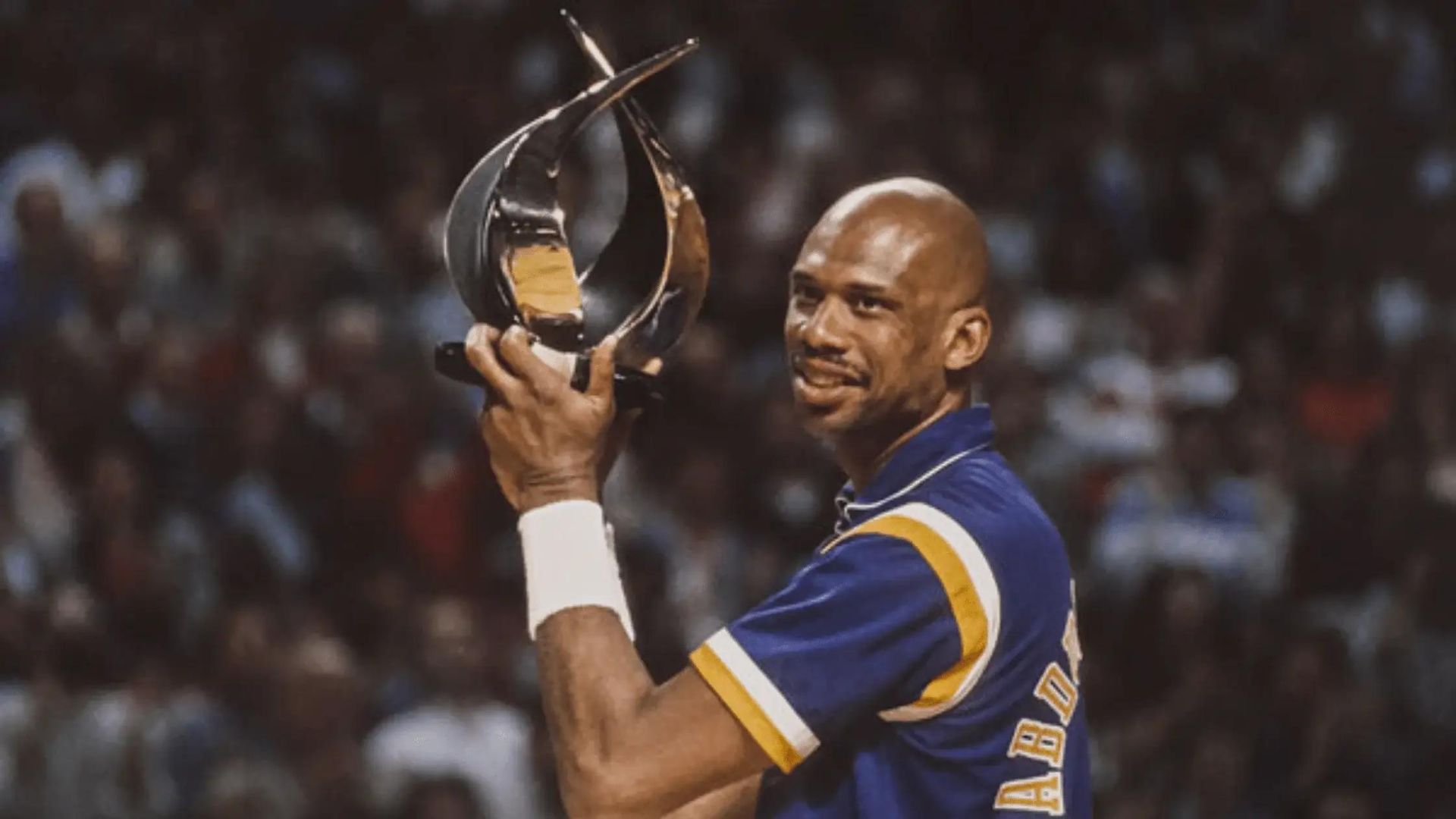
Kareem Abdul-Jabbar was born Ferdinand Lewis Alcindor Jr. on April 16, 1947, in the Harlem neighborhood of New York City. He was the only child of Ferdinand Lewis “Al” Alcindor Sr., a New York Transit Authority police officer (who also played jazz trombone), and Cora Lillian Alcindor, who worked as a department-store price checker.
He was raised in a devout Catholic, middle-class household. At birth he was notably large (weighing over 12 pounds) and grew very quickly in childhood. For example, by eighth grade he was nearly 7 feet tall and could already dunk a basketball.
When Kareem (then Lew Alcindor) was three years old, his family moved from Harlem to the Dyckman Street public housing project in upper Manhattan – a racially mixed, middle-class neighborhood. His early schooling began in New York, but in fourth grade his parents sent him to Holy Providence School, an all-black Catholic boarding school outside Philadelphia, for one year.
This is where he first practiced the hook shot that would later become his trademark. He then returned to New York for secondary school. Abdul-Jabbar attended Power Memorial Academyin Manhattan, an all-boys Catholic high school. At Power Memorial he not only played basketball but also cultivated wide interests: he read extensively, joined the debate team, and often frequented New York jazz clubs, reflecting the artistic and intellectual environment of his upbringing.
After high school, he went on to college. Abdul-Jabbar enrolled at the University of California, Los Angeles (UCLA) and earned a Bachelor of Arts in Historyin 1969.
| Fact Category | Verified Details |
| Full Name | Kareem Abdul-Jabbar |
| Date of Birth | April 16, 1947 |
| Height | 7 ft 2 in (218 cm) |
| Kareem Abdul-Jabbar Net Worth 2026 | Not publicly disclosed |
| NBA Career Length | 20 seasons |
| Total Career Points | 38,387 points |
| Major Achievements | 6× Champion, 6× MVP |
| Signature Skill | Skyhook shot |
| College Career | UCLA, 3 NCAA titles |
| Post-Retirement Work | Author, coach, activist |
Kareem Abdul-Jabbar’s Career
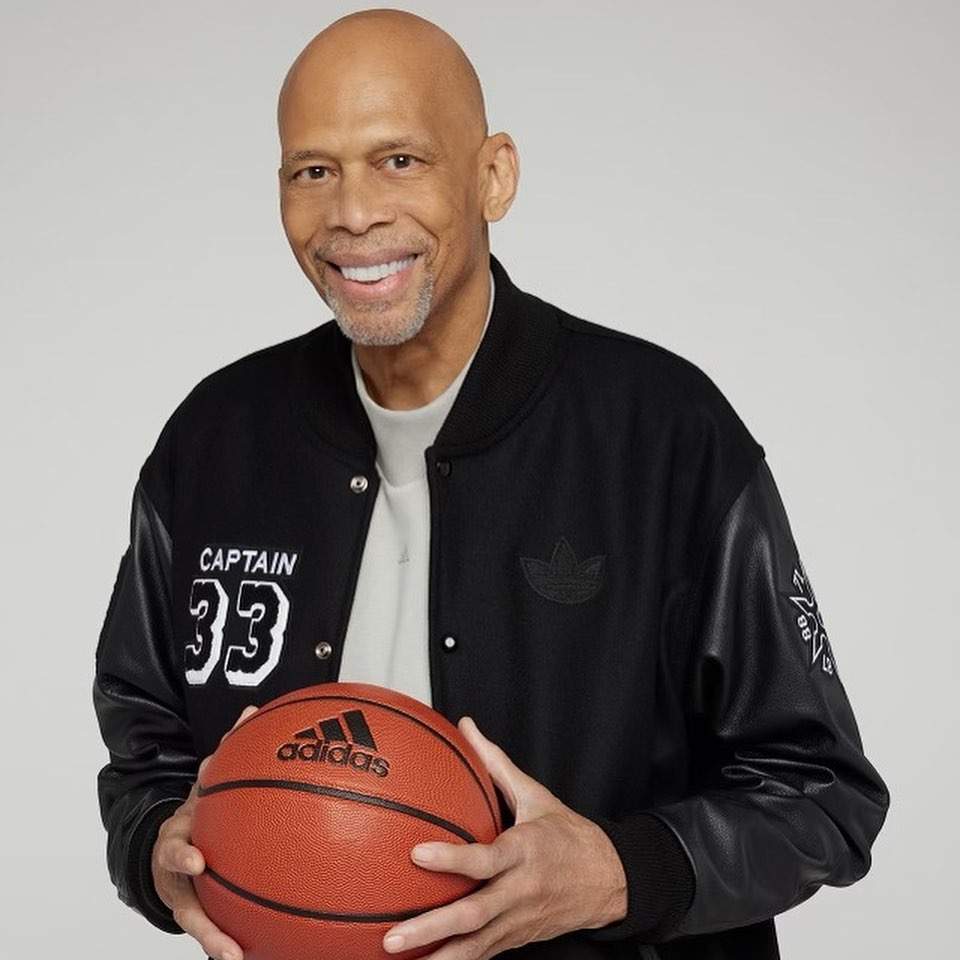
Kareem Abdul-Jabbar spent two decades in the NBA (1969–1989) as a dominant center for the Milwaukee Bucks and Los Angeles Lakers. He won a record six regular-season Most Valuable Player awards and was a member of six NBA championship teams.
By the time he retired in 1989, he had scored 38,387 points and held the league’s career records in scoring and blocked shots. He was selected to 19 All-Star games and twice earned Finals MVP honors.
NBA historians note that “no player in hoops history achieved as much individual and team success” as Abdul-Jabbar, and teammates and coaches frequently cited him among the all-time greats.
Early Basketball Career And College Dominance
Abdul-Jabbar (then known as Lew Alcindor) first rose to prominence at UCLA under Coach John Wooden. After sitting out as a freshman in 1965–66, he led the Bruins to three consecutive NCAA championships (1967–1969), compiling an 88–2 record during that span.
He was a three-time NCAA Tournament Most Outstanding Player – the only player ever to earn that honor all three seasons – and was twice voted the national College Player of the Year (1967 and 1969).
In each of his varsity years he was a consensus All-American center, and he helped establish UCLA’s dynasty in college basketball, winning three straight national titles under Wooden.
How Kareem Abdul-Jabbar Started His Professional Career
The 7-foot-2 Abdul-Jabbar was selected first overall by the NBA’s Milwaukee Bucks in the 1969 draft. He made an immediate impact: as a rookie in 1969–70 he averaged 28.8 points and 14.5 rebounds per game, earning NBA Rookie of the Year honors.
That season the Bucks improved dramatically, and by his second year Abdul-Jabbar and veteran guard Oscar Robertson led Milwaukee to a 66–16 record and the franchise’s first NBA title.
In the 1970–71 playoffs the Bucks swept the Baltimore Bullets in the Finals, and Abdul-Jabbar was voted Finals MVP while also capturing his first league scoring title (31.7 ppg) and his first regular-season MVP award.
NBA Breakthrough And Rise To Stardom
In Milwaukee’s 1970s heyday, Abdul-Jabbar established himself as the NBA’s premier big man. He repeated as NBA scoring champion in 1971–72 and earned a second straight MVP award that season.
By 1973–74 he won a third MVP (his third in five years) while ranking among the league leaders in points, rebounds, blocked shots and field-goal percentage. This string of dominance made him the face of the league.
(He also converted to Islam and changed his name to Kareem Abdul-Jabbar before the 1971–72 season, a personal detail of the era.) After the 1974–75 season, seeking a trade to a bigger market, he was sent to the Los Angeles Lakers.
He wasted no time shining in L.A.: in 1975–76 he averaged 27.7 points and 16.9 rebounds and was voted NBA MVP for the fourth time. He earned a fifth MVP award in 1976–77, tying the all-time record set by Bill Russell. These achievements confirmed Abdul-Jabbar’s status as a superstar during his formative NBA years.
Dominance With The Milwaukee Bucks And Los Angeles Lakers
Abdul-Jabbar’s career is marked by sustained team success in Milwaukee and Los Angeles. With the Bucks he helped win four straight Central Division titles (1971–1974).
Milwaukee’s 1970–71 championship was built around his MVP play, and the Bucks returned to the Finals in 1974 (falling to Boston). He was unhappy with Milwaukee by 1975 and requested a trade, which sent him to Los Angeles.
In L.A. he became the cornerstone of the “Showtime” Lakers alongside Earvin “Magic” Johnson. Magic’s arrival in 1979 coincided with the Lakers winning five NBA titles in the 1980s (1980, 1982, 1985, 1987 and 1988). During that span the Lakers reached the Finals eight times in ten seasons. Abdul-Jabbar earned his second Finals MVP in 1985 after leading the Lakers to victory over Boston.
In Los Angeles he also helped the team claim nine Pacific Division crowns from 1979 to 1988. His durability allowed him to contribute through age 40 – for example, in 1985 at age 38 he averaged 30.2 points and 11.3 rebounds in the NBA Finals, earning Finals MVP – before retiring after the 1988–89 season.
Career-Defining Achievements And Records
Abdul-Jabbar’s trophy case and stat sheet are unparalleled. He won six NBA championships and six regular-season MVP awards – both NBA records – as well as two Finals MVP awards.
He was the NBA’s leading scorer, retiring in 1989 with 38,387 points (a record that stood for 39 years), and he remains among the all-time leaders in career rebounds (17,440) and blocked shots (3,189).
His streak of scoring in double figures in 787 consecutive games is one of the longest in NBA history. He made 19 All-Star teams and a remarkable 15 All-NBA teams (10 First Team), reflecting his elite status.
He was also a five-time All-Defensive First Team honoree and led the league in blocked shots four times. In the 1970–71 season he captured the NBA Rookie of the Year award as well.
By the end of his career he held records for games played (1,560), minutes, field goals made and attempted, blocks and defensive rebounds. For his career he averaged 24.6 points, 11.2 rebounds and 3.6 assists per game. These accomplishments cemented his place as a statistical legend.
Signature Playing Style And The Skyhook Legacy
On the court, Abdul-Jabbar’s trademark move was the “skyhook,” a high-arcing one-handed shot that defenders could rarely block. It was so effective that sportswriters dubbed it “the ultimate weapon.” He could even execute it with either hand. Standing 7 ft 2 in with a slender 225-pound frame, he combined size with surprising agility and finesse.
Unlike the traditional bruising big men of earlier eras, Abdul-Jabbar emphasized speed, footwork and precision. He brought an unprecedented grace to the center position – NBA.com observed that he introduced “grace, agility, and versatility” to a position formerly defined by raw power.
Fellow players took note: Magic Johnson once called him “the most beautiful athlete in sports” for his fluid play. Abdul-Jabbar’s combination of athleticism, shot-making skill and conditioning (he famously practiced yoga and martial arts to stay limber) made his style revolutionary. His skyhook shot has since become a legendary part of basketball lore.
Career Longevity And Consistent Performance
Abdul-Jabbar’s career is also remarkable for its longevity and consistency. He played 20 seasons (1969–1989) and appeared in 1,560 NBA games. He scored in double figures every season, and for 17 consecutive seasons he averaged over 20 points per game. In fact, he scored at least 10 points in 787 straight games – an NBA record streak of consistency.
Even in his late 30s and early 40s he remained highly productive: for six straight seasons in the mid-1980s he averaged at least 20 points per game. At age 40 he was still a key contributor on championship teams.
His career averages (24.6 points and 11.2 rebounds) are among the highest ever for a center. Achieving such sustained excellence required exceptional conditioning. Reporters noted that Abdul-Jabbar maintained a strict fitness regimen “years ahead of its time.” He credited yoga, martial arts training and meditation with keeping him fresh and durable into his 40s.
Influence On The Game Of Basketball
Abdul-Jabbar’s impact extended beyond his own statistics. He transformed how the center position could be played, emphasizing skill, intelligence and conditioning. Many younger players sought to emulate his rigorous training habits. His combination of longevity, scoring prowess and defensive presence raised the standard for all big men.
He earned universal respect within the league: former Lakers coach Pat Riley toasted him as “the greatest player ever.” Magic Johnson’s praise – calling him “the most beautiful athlete in sports” – reflected the admiration he commanded.
Teammates also credited him for setting a high bar; Lakers assistant coach Bill Bertka later said Abdul-Jabbar’s accomplishments made him “the best center of all time.” In short, Abdul-Jabbar inspired a generation of players through both his on-court innovations and his professionalism.
Career Legacy As One Of The Greatest NBA Players
Kareem Abdul-Jabbar’s legacy is enshrined among basketball’s legends. He was inducted into the Naismith Memorial Basketball Hall of Fame in 1995. The NBA named him to its 35th and 50th anniversary all-time teams. Analysts and historians frequently rank him near the top in NBA history.
Indeed, the Academy of Achievement called him “the greatest all-around player in the history of professional basketball,” noting that he “dominated his sport as long or as completely as” any athlete.
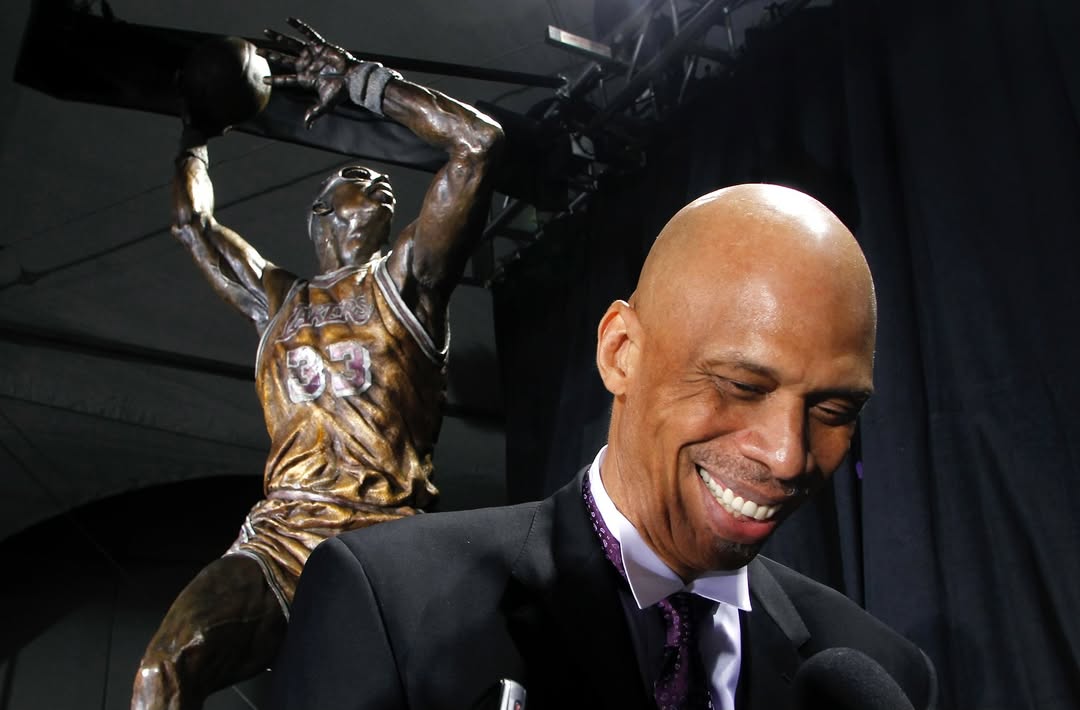
Virtually every major honor – from his Rookie of the Year trophy to his second Finals MVP – is part of an unparalleled résumé. His No. 33 jersey has been retired by the Lakers.
In popular discussion he is routinely included in “greatest of all time” debates. All evidence points to Abdul-Jabbar’s enduring status as one of the most accomplished players ever to play the game.
Life After Basketball And Professional Endeavors
After retiring as a player, Abdul-Jabbar pursued coaching, writing and advocacy. He served as an assistant coach in the NBA (with the Los Angeles Clippers and Seattle SuperSonics) and even as a head coach in a minor league.
From 2005 onward he joined the Lakers’ staff as a special assistant coach and mentor to their centers. In 2009 he founded the Skyhook Foundation, a nonprofit that combines basketball with education; it fields a traveling youth team and promotes STEM learning and leadership for underserved students.
He also became a bestselling author and producer. He has written 17 books on topics from basketball history to social issues and co-wrote and produced a 2011 documentary (“On the Shoulders of Giants”) about the Harlem Renaissance-era basketball team.
His writings and speeches often address history, race and culture. Abdul-Jabbar has earned numerous honors off the court as well: for example, he was named a U.S. Cultural Ambassador in 2012 and received the Presidential Medal of Freedom in 2016 – the nation’s highest civilian award – for his contributions in and out of sports.
Current Activities And Public Engagements
Today Abdul-Jabbar remains active as an author, speaker and advocate. He regularly publishes commentary on sports and social issues and speaks at academic and public events.
In 2021 he executive-produced and narrated a History Channel documentary titled Fight the Power: The Movements That Changed America (released on Juneteenth) to highlight civil rights history.
The NBA has also honored his legacy by establishing the annual Kareem Abdul-Jabbar Social Justice Champion Award (first presented in 2021) to recognize players who advance causes of racial equality and social justice.
Kareem Abdul-Jabbar Net Worth
As of 2026, Kareem Abdul Jabbar's net worth has not been publicly disclosed, and no figure has been officially verified by major financial authorities. His documented sources of income include earnings from his 20-season NBA career, endorsement and sponsorship deals with brands such as Adidas, and revenue from media work, including acting roles and book authorship.
FAQs
1. Who Is Kareem Abdul-Jabbar?
Kareem Abdul-Jabbar is a former American professional basketball player widely regarded as one of the greatest in NBA history. He played 20 seasons and is known for his record achievements and longevity.
2. What Teams Did Kareem Abdul-Jabbar Play For?
He played for the Milwaukee Bucks and the Los Angeles Lakers during his NBA career. He won championships with both franchises.
3. What Is Kareem Abdul-Jabbar Best Known For?
He is best known for his signature “skyhook” shot, which was highly effective and difficult to defend. He is also recognized for his scoring record and multiple MVP awards.
4. How Many Championships Did Kareem Abdul-Jabbar Win?
Kareem Abdul-Jabbar won six NBA championships during his career. These titles came with both the Bucks and the Lakers.
5. What Are Kareem Abdul-Jabbar’s Major Achievements?
He earned six MVP awards, which remains an NBA record, and was selected to 19 All-Star games. He also retired as the league’s all-time leading scorer.

Chloe Anderson
Author
Chloe Anderson is a passionate explorer of the world of celebrity finance, known for her keen insights and captivating storytelling. With a background in finance journalism, Chloe has a knack for unraveling the financial mysteries behind the stars.
Her journey into the fascinating realm of celebrity net worth began with a deep curiosity about how fame and fortune intersect. Chloe believes that understanding the financial lives of iconic personalities adds a unique layer of intrigue to their captivating stories.
With a commitment to delivering accurate and engaging content, Chloe takes you on a journey through the financial successes, investments, and philanthropic endeavors of influential figures. She combines her expertise in finance with her love for storytelling to create articles and features that both inform and entertain.
Latest Articles
Popular Articles