How Much Was F. Lee Bailey Worth At The Time Of His Death?
F. Lee Bailey Net Worth breakdown covering career earnings, legal work, and why no official figure was publicly confirmed.
Author:Chloe AndersonApr 04, 20269.4K Shares214.6K Views
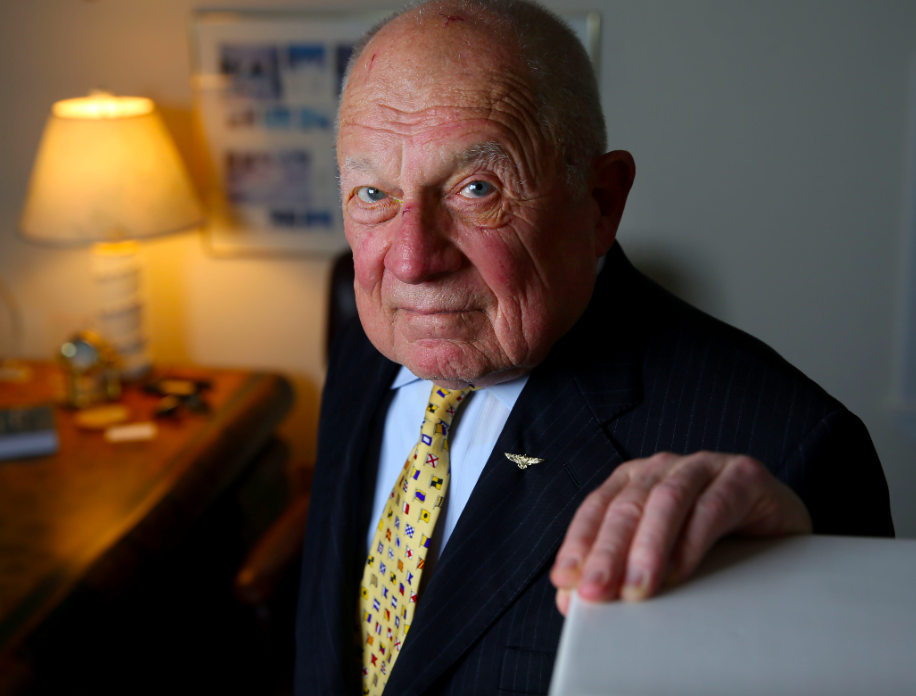
Francis Lee Bailey Jr. was born on 10 June 1933 in Waltham, Massachusetts, a suburb of Boston. His father, Francis L. Bailey Sr., worked as a newspaper advertising salesman, and his mother, Grace (née Mitchell), was a teacher. The couple divorced when Bailey was ten years old. After the divorce, his mother sent him to boarding school to continue his education.
Bailey grew up in New Hampshire during his school years. He first attended Cardigan Mountain School, a private boarding school in New Hampshire. He later graduated from Kimball Union Academy (also in New Hampshire) in 1950. While at school he pursued various activities and was noted for his independence, taking part in oratory contests, woodworking projects, and playing ice hockey.
After finishing at Kimball Union, Bailey went on to study at Harvard University beginning in 1950. He left Harvard after two years, in 1952. Following his military service, he was admitted to Boston University School of Law and earned his law degree in 1960.
| Category | Details |
| Full Name | Francis Lee Bailey Jr. |
| Date of Birth | 10 June 1933 |
| Place of Birth | Waltham, Massachusetts, USA |
| Father | Francis L. Bailey Sr. (newspaper advertising salesman) |
| Mother | Grace Mitchell (teacher) |
| Parents’ Status | Divorced when he was 10 years old |
| Early Education | Cardigan Mountain School (New Hampshire) |
| High School | Kimball Union Academy (graduated 1950) |
| Activities in School | Oratory contests, woodworking, ice hockey |
| College | Harvard University (1950–1952, did not graduate) |
| Military Service | U.S. Marine Corps (jet pilot and legal officer) |
| Law School | Boston University School of Law |
| Law Degree | Earned in 1960 |
| Legal Challenges | Disbarred in 2001 due to professional misconduct involving client funds and legal violations. |
| Net Worth | His net worth was never officially disclosed; income came from legal practice, books, media work, and consulting. |
F. Lee Bailey Career
F. Lee Bailey became one of the most celebrated criminal defense attorneys in the United States, renowned for winning or influencing landmark cases from the 1960s through the 1990s.
He rose to national prominence with a string of headline trials and acquired a reputation for his theatrics and success in court. Over four decades he defended clients ranging from Dr. Sam Sheppard (whose conviction he overturned at the U.S. Supreme Court) to sports icon O.J. Simpson.
At the height of his career, Bailey was often described as a “celebrity lawyer,” with a commanding persona that drew media attention. By the 1980s and 1990s he was widely known for top-tier cases, high-powered trial strategies, and even publishing legal textbooks and memoirs.
Near the end of his professional life he ran a law consulting business after his law licenses were revoked, but his earlier victories and courtroom flair left a lasting mark on criminal defense practice.
How F. Lee Bailey Started His Legal Career
Bailey’s legal career began after an unusual start in the military. A Harvard University student, he left college to serve as a Marine Corps jet pilot and legal officer in the early 1950s.
After his service he enrolled at Boston University School of Law, graduating in 1960 at the top of his class. Fresh out of law school he set up a private practice in Massachusetts.
In those early years Bailey also built a detective agency and became an expert in polygraphy as a criminal defense tool. His very first major case came in 1960, when he defended a man accused in a gruesome “torso murder” case (George Edgerly) and won an acquittal.
These experiences launched him on a path as a trial lawyer, and he quickly took on appeals and homicide defenses that brought him to national attention.
Early Career In Criminal Defense Law
In the 1960s Bailey established himself as a specialist in high-profile murder cases. In 1966 he won an unprecedented U.S. Supreme Court victory on behalf of Dr. Sam Sheppard, arguing that Sheppard had been denied a fair trial due to rampant media coverage.
The Court reversed Sheppard’s conviction, and Bailey secured his acquittal at retrial later that year. Around the same era, Bailey defended Carl Coppolino (a New York physician accused of poisoning victims) and Albert DeSalvo, the confessed “Boston Strangler.”
He negotiated a deal for DeSalvo and saved his life, though DeSalvo remained convicted on related charges. In 1971 Bailey also handled one of the nation’s most sensitive cases: he was lead defense counsel for Army Captain Ernest L. Medina, one of the officers charged in the My Lai Massacre.
Despite intense public pressure, Bailey secured Medina’s acquittal at court-martial. These early successes reversing a murder verdict and winning acquittals in both state and military courts cemented Bailey’s reputation as a formidable criminal defense lawyer in the 1960s.
F. Lee Bailey’s Most Notable Legal Cases
Bailey’s career featured several extremely prominent cases that added to his fame. In 1976 he represented heiress Patricia Hearst, arguing that her notorious bank-robbing actions had been coerced by the Symbionese Liberation Army; although Hearst was convicted, this defense drew national attention.
He also served clients like Santo Trafficante (a Tampa crime boss) and other individuals in sensational trials. Among his signature cases was the defense of a Colombian drug trafficker whose assets he managed (the Claude Duboc case); the handling of the forfeited stock from that case later became the basis for his professional misconduct charges.
But the cases that defined Bailey’s career remained Sheppard, DeSalvo, Medina, Hearst, and Simpson. In books and memoirs he chronicled many of these trials; for example, he co-authored practice guides like Investigation and Preparation of Criminal Cases(1970) and wrote the bestseller The Defense Never Restsabout his own work.
His record included landmark legal outcomes (like Sheppard v. Maxwell, 384 U.S. 333 (1966)) and high-profile acquittals, which set him apart as one of the era’s leading defense attorneys.
F. Lee Bailey’s Role In The O.J. Simpson Trial
In the mid-1990s, Bailey joined Johnnie Cochran, Robert Shapiro, Alan Dershowitz and others on O.J. Simpson’s defense “Dream Team.”
In that 1995 murder trial of Simpson, Bailey was given what many called the most difficult task: to cross-examine Los Angeles police Detective Mark Fuhrman. Simpson faced nearly conclusive forensic evidence, so Bailey aggressively attacked Fuhrman’s credibility and probed his history of racial slurs.
A dramatic moment came when Bailey asked Fuhrman whether he had ever used a racial epithet (“…in the past 10 years, Detective Fuhrman?”). Fuhrman’s denials and the later revelation of his lies helped create reasonable doubt.
Bailey’s “punishing” cross of Fuhrman was widely credited as a turning point in the case. The jury ultimately acquitted Simpson, and Bailey’s work on the case became one of the trial’s defining moments.
Even Simpson later praised Bailey as “great, ...smart, sharp as ever” in keeping him informed each day. Bailey’s contribution to the Simpson defense especially his forensic and character cross-examination is remembered as a pinnacle of his courtroom career.
F. Lee Bailey’s Courtroom Style And Legal Expertise
Bailey’s success rested as much on his unique style as on his legal arguments. He cultivated a “pitbull” image on the stand: short and stocky with bushy sideburns, wearing custom-tailored suits, and speaking with highly theatrical flair.
He deployed florid oratory and had an almost photographic memory, which he used to recall details of hundreds of exhibits and prior testimony. He was famous for relentless, probing cross-examinations.
For example, he often structured questions in rapid-fire series, an approach learned from his polygraph training. Colleagues noted that Bailey’s memory was extraordinary: his longtime partner Judge Kenneth Fishman said Bailey “had one of the most remarkable memories I’ve ever seen and a fair dose of chutzpah … to become… a model criminal defense attorney.”
Bailey also educated lawyers through books and lectures: he spoke at thousands of bar seminars free of charge and wrote widely on criminal trial techniques. This combination of persona, forensic knowledge, and teaching helped define his reputation as one of the most dynamic trial lawyers of his generation.
Career Achievements And Professional Recognition
Throughout his career, Bailey accumulated notable legal accomplishments and professional accolades. He published an autobiography (The Defense Never Rests) and co-authored over twenty books and manuals on criminal trial law, which became reference works for practicing attorneys. Bailey earned a reputation for skillfully overturning wrongful convictions, and his early success in the Sheppard case established a Supreme Court precedent for fair trial rights.
He lectured at bar association conferences nationwide, often highlighting investigative methods and trial strategy. In the 1970s he also hosted television programs that applied legal and scientific insights to true-crime issues.
Institutions recognized Bailey’s expertise: he remained licensed in both Massachusetts and Florida during his prime years and was sought after as a defense consultant. Toward the end of his active practice, he co-authored a modern cross-examination handbook with Judge Fishman, underscoring his long-term commitment to legal education.
F. Lee Bailey’s Later Career And Legal Challenges
In the 1990s and 2000s, Bailey’s career was overshadowed by legal and ethical challenges. During the mid-1990s he became embroiled in a dispute over stock from a client that was earmarked for forfeiture to the government. Bailey refused to release the stock as agreed, believing he had a right to it as payment.
He spent almost six weeks in federal prison in 1996 for contempt of court in that matter. In late 2001 the Florida Supreme Court disbarred Bailey for egregious misconduct, primarily citing serious trust-account violations and misappropriation of client assets.
Massachusetts followed by revoking his law license through reciprocal discipline. After these setbacks, Bailey moved to Maine and operated a small legal consulting firm; he later sought readmission to the bar, but in 2014 the Maine Supreme Judicial Court upheld a decision denying him a license to practice.
In his final years Bailey continued to write and mentor lawyers despite his formal disbarment. His career ultimately ended on a complex note, but his earlier achievements in criminal defense remain the hallmarks of his professional legacy.
F Lee Bailey Net Worth
At the time of his death, F. Lee Bailey’s net worth was not publicly disclosed, and no figure has been officially verified by major financial authorities. He earned income from legal fees through his law practice, as well as from published books, television hosting, media work, and later consulting through F. Lee Bailey Consulting; however, specific earnings figures have not been publicly disclosed.
FAQs
1. Who Was F. Lee Bailey?
F. Lee Bailey was an American criminal defense attorney known for handling several high-profile cases in the United States. He gained national recognition for his courtroom skills and involvement in landmark trials.
2. What Is F. Lee Bailey Best Known For?
He is best known for defending clients in major cases such as the O.J. Simpson trial and the appeal of Dr. Sam Sheppard. His cross-examination of key witnesses was widely noted.
3. Did F. Lee Bailey Attend Harvard University?
Yes, Bailey attended Harvard University but left before completing his degree. He later earned his law degree from Boston University School of Law.
4. What Role Did F. Lee Bailey Play In The O.J. Simpson Trial?
Bailey was part of Simpson’s defense team and led the cross-examination of Detective Mark Fuhrman. His questioning challenged the credibility of key evidence presented by the prosecution.
5. Was F. Lee Bailey Ever Disbarred?
Yes, Bailey was disbarred in Florida in 2001 due to professional misconduct involving client funds. His law license was also revoked in Massachusetts through reciprocal discipline.
6. What Was F. Lee Bailey’s Early Career Like?
He began his legal career after serving in the U.S. Marine Corps. Shortly after graduating from law school, he handled criminal defense cases that brought him early recognition.

Chloe Anderson
Author
Chloe Anderson is a passionate explorer of the world of celebrity finance, known for her keen insights and captivating storytelling. With a background in finance journalism, Chloe has a knack for unraveling the financial mysteries behind the stars.
Her journey into the fascinating realm of celebrity net worth began with a deep curiosity about how fame and fortune intersect. Chloe believes that understanding the financial lives of iconic personalities adds a unique layer of intrigue to their captivating stories.
With a commitment to delivering accurate and engaging content, Chloe takes you on a journey through the financial successes, investments, and philanthropic endeavors of influential figures. She combines her expertise in finance with her love for storytelling to create articles and features that both inform and entertain.
Latest Articles
Popular Articles