El Chapo Net Worth 2026: Wealth And Reality
El Chapo Net Worth reflects years of illicit profits. See what’s confirmed about his income sources, losses, and current financial standing.
Author:Chloe AndersonApr 14, 20262.7K Shares46K Views
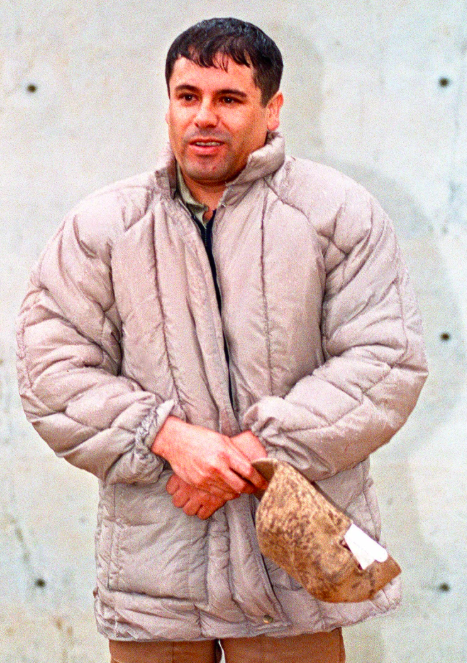
Joaquín Archivaldo Guzmán Loera was born in the rural village of La Tuna (Badiraguato municipality) in Sinaloa, Mexico. His exact birth date is uncertain, but most sources agree on 1957 (often cited as 4 April 1957). He was the son of María Consuelo Loera Pérez and Emilio Guzmán Bustillos.
Consuelo and Emilio were small-scale farmers (officially ranchers) who scraped by cultivating beans and corn on steep, rocky slopes. Joaquín was one of at least ten younger siblings in this large farming family. The Loera–Guzmán household lived in extreme poverty: their mud-brick home had no electricity or running water, and mules were the only means of transport in the village.
Guzmán’s childhood was defined by long hours of work rather than formal schooling. He received very little education. From a young age he laboured to help feed the family for example, carrying heavy sacks of oranges up and down the hills and selling them in local markets for a few pesos.
His mother later recalled that even as a small boy he “fought for a better life” for his family. The remote Sinaloa highlands where he grew up were long known for poppy and marijuana cultivation, a fact that shaped the region’s economy and community; drug crops had been grown in the Sierra Madre mountains around La Tuna for decades. (Guzmán’s nickname “El Chapo” ( Spanish for “Shorty” ) was earned in childhood on account of his short, stocky stature.)
| Fact | Details |
| Full Name | Joaquín Guzmán Loera |
| Known As | El Chapo |
| Birth Year | 1957 (approx.) |
| Birthplace | Sinaloa, Mexico |
| Background | Raised in extreme poverty |
| Early Work | Farm labor, fruit selling |
| Crime Entry | Teenage drug trafficking |
| Cartel Role | Leader of Sinaloa Cartel |
| Net Worth | ~$1B (unverified peak) |
| Income Source | Drug trafficking |
| Smuggling Methods | Tunnels, aircraft, vessels |
| Arrests | 1993, 2014, 2016 |
| Escapes | 2001, 2015 |
| Sentence | Life + 30 years |
| Current Status | ADX Florence prison |
Early Involvement In The Drug Trade
Guzmán grew up in Sinaloa, a region long associated with illicit crop cultivation. Reports indicate that he entered the narcotics business at a very young age, handling small shipments of cocaine, heroin, marijuana and methamphetamine in northwestern Mexico.
By his late teens he was already moving consignments between rural Sinaloa and larger trafficking networks. This groundwork in local smuggling laid the foundation for his later rise.
How Joaquín “El Chapo” Guzmán Entered Organized Crime
In the early 1980s Guzmán formalised his role in organized crime by joining the Guadalajara Cartel, led by Miguel Ángel Félix Gallardo. Under Gallardo’s tutelage he quickly learned large-scale trafficking techniques and began to establish contacts with Colombian suppliers.
Accounts from that era note that Guzmán “rapidly rose through the ranks” of the Guadalajara group. His speed and skill in moving narcotics earned him early notoriety. Within a few years he was known within the network as “El Rápido”(The Fast One) for the swift deliveries of cocaine to U.S. customers.
Rise Within The Sinaloa Cartel
When the Guadalajara Cartel fractured in the late 1980s, Guzmán shifted his allegiance to the Sinaloa Cartel. During the 1990s he steadily climbed to its top leadership. By the mid-1990s he had become a principal commander in the Sinaloa organization; some sources report that he effectively became co-head of the cartel around 1995. After his 2001 prison escape (see below), Guzmán joined forces with veteran trafficker Ismael “El Mayo” Zambada.
Together they emerged as the dominant leaders of the cartel. Under their direction the Sinaloa Cartel expanded its operations across western and northern Mexico, controlling key border corridors into the United States.
Key Operations And Expansion Of Criminal Activities
As head of the Sinaloa Cartel, Guzmán oversaw massive, innovative smuggling operations. His organization invested in elaborate logistics projects and concealment methods. For example, trial evidence and government reports detail use of:
- Clandestine tunnels:He funded construction of long underground tunnels under the U.S.–Mexico border, complete with ventilation systems, to move large drug shipments unseen.
- Custom vehicles and vessels:His network used self-propelled submarines and specially outfitted cargo planes and trains to carry narcotics. These included carbon-fiber aircraft and hidden freight compartments designed to evade radar and inspections.
- Concealment in goods:Guzmán’s crews famously hid multi-ton shipments inside ordinary cargo. In one case, authorities seized seven tonnes of cocaine concealed in hundreds of cans of chili peppers. Trials also revealed secret compartments in trucks, fishing boats and even household goods smuggling drugs.
- Wide distribution cells:He organized distribution cells in major U.S. cities (including Los Angeles, Chicago, Miami, Atlanta and New York). Narcotics were shipped from source countries to the U.S. where trusted wholesalers took over, then proceeds were laundered back to Mexico through bulk cash shipments and shell companies.
Under Guzmán’s guidance the cartel also maintained an armed enforcement wing. The group employed hundreds of armed “sicarios” (hitmen) to protect its routes, carry out kidnappings or assassinations of rivals, and enforce discipline within its territory. This ruthless enforcement helped the cartel maintain control over contested areas in Mexico and assert dominance over rival groups.
Peak Influence As A Global Drug Trafficker
By the 2000s, Guzmán was widely recognized as one of the world’s top drug kingpins. U.S. prosecutors described his organization as a “massive, multi-billion dollar criminal enterprise” that for decades “flooded the streets of the United States with hundreds of tons of cocaine”.
At its peak his cartel handled staggering volumes of narcotics from Central and South America, especially Colombia, into U.S. markets. Forbes magazine estimated Guzmán’s personal net worth at about $1 billionin 2009, with the cartel’s annual revenues possibly around $3 billion.
He once boasted to a journalist: “I have a fleet of submarines, airplanes, trucks and boats”to move drugs internationally. Public recognition of his power was extraordinary. In 2004 the United States offered a $5 million reward for information leading to his capture, and by 2013 he had been named “Public Enemy No. 1” in Chicago.
In 2012 the U.S. Treasury Department officially described Guzmán as “the world’s most powerful drug trafficker,”imposing sanctions on his network. Under his command the Sinaloa Cartel was believed to control a large portion of the drugs flowing into the U.S., including dominating the Asian–Mexico–U.S. methamphetamine trade. His influence extended far beyond Mexico, making him a priority target in the international war on drugs.
Arrests, Escapes, And Law Enforcement Pursuit
Guzmán’s career was punctuated by a dramatic series of arrests and prison breaks. His first major capture came in 1993 when Guatemalan authorities arrested him and extradited him to Mexico.
He was convicted on drug trafficking charges and sentenced to over 20 years in a maximum-security prison. While behind bars he continued to manage cartel affairs, allegedly bribing officials for privileges.
In January 2001, fearing extradition to the U.S., Guzmán arranged a daring escape from his cell by hiding inside a laundry cart with the aid of complicit guards. This breakout involved scores of prison staff and prompted widespread investigations into corruption. For over a decade thereafter Guzmán remained a fugitive. Mexican and U.S. forces conducted numerous manhunts.
Finally, in February 2014 Guzmán’s luck ran out: Mexican naval forces raided a seaside hotel in Mazatlán and arrested him. He was transferred to the Federal Social Readaptation Center No. 1 (known as Altiplano), a high-security prison.
However, the cartel’s ingenuity reemerged on 11 July 2015when Guzmán escaped again via a mile-long underground tunnel dug into his cell. The tunnel was sophisticated, with lighting and a motorcycle on rails to carry dirt. His second escape was a major embarrassment for Mexican authorities and triggered one of the largest manhunts in the country’s history.
Final Capture, Trial, And Conviction
Guzmán’s final capture occurred in January 2016. Mexican marines, aided by U.S. intelligence, surrounded a safe house in Los Mochis, Sinaloa. Guzmán fled through another tunnel and attempted to escape in a stolen vehicle, but was apprehended on 8 January 2016. Shortly thereafter Mexico agreed to extradite him to the United States.
He was flown to New York (arriving January 2017) to face a U.S. federal indictment. In a Brooklyn federal court, Guzmán was prosecuted on a 10-count indictment including drug trafficking and murder-conspiracy charges.
After a three-month trial concluding in early 2019, a jury unanimously found him guilty on all counts(February 12, 2019). U.S. District Judge Brian Cogan sentenced Guzmán on July 17, 2019. He received life imprisonment plus 30 yearseffectively guaranteeing he will spend the rest of his life in prison.
The judge also ordered forfeiture of roughly $12.6 billion, reflecting the vast illicit profits of Guzmán’s enterprise. Prosecutors at sentencing summarized his career as an international drug trafficking reign, noting evidence of over a million kilograms of narcotics imported into the U.S. under his command. The conviction brought to an end the authorities’ campaign against one of the most prominent figures in the history of organized crime.
Current Status And Imprisonment
As of 2026, Joaquín Guzmán remains incarcerated in a maximum-security facility in the United States. He is serving his life-plus-30-year sentence at the federal supermax prison in Florence, Colorado (commonly known as ADX Florence).
Conditions there are extremely restrictive; Guzmán is kept in near-total isolation. He has filed appeals and petitions challenging his conviction and treatment, but U.S. courts have repeatedly upheld the verdict.
A 2022 appellate ruling refused to overturn his conviction, and a late 2023 decision rejected his requests for sentence review. With his legal options exhausted, Guzmán’s status remains that of a convicted drug kingpin serving a life sentence. His former cartel, though fragmented, continues to be one of Mexico’s most powerful criminal organizations.
El Chapo Net Worth
As of 2026, El Chapo's net worth has not been publicly disclosed, and no figure has been officially verified by major financial authorities. His income was derived from his role as the head of the Sinaloa Cartel, primarily through illicit drug trafficking. His organization produced and smuggled various drugs, including marijuana, heroin, cocaine, and methamphetamine. However, the exact earnings from these activities have not been publicly confirmed.
FAQs
1. Who Is El Chapo?
El Chapo, whose real name is Joaquín Guzmán Loera, is a Mexican drug trafficker. He was a leader of the Sinaloa Cartel, one of the most powerful criminal organizations in the world.
2. Why Is El Chapo Famous?
He became widely known for leading a large-scale drug trafficking network that supplied narcotics to the United States. His notoriety also grew due to his high-profile prison escapes and eventual capture.
3. What Cartel Did El Chapo Lead?
El Chapo was a key leader of the Sinaloa Cartel. Under his leadership, the cartel expanded its operations across Mexico and into international markets.
4. How Was El Chapo Captured?
He was captured multiple times, with his final arrest occurring in January 2016 by Mexican authorities. The operation was supported by U.S. intelligence and followed a large-scale manhunt.
5. Where Is El Chapo Now?
As of 2026, he is imprisoned in ADX Florence, a maximum-security federal prison in Colorado. He is held under strict conditions, including near-total isolation.

Chloe Anderson
Author
Chloe Anderson is a passionate explorer of the world of celebrity finance, known for her keen insights and captivating storytelling. With a background in finance journalism, Chloe has a knack for unraveling the financial mysteries behind the stars.
Her journey into the fascinating realm of celebrity net worth began with a deep curiosity about how fame and fortune intersect. Chloe believes that understanding the financial lives of iconic personalities adds a unique layer of intrigue to their captivating stories.
With a commitment to delivering accurate and engaging content, Chloe takes you on a journey through the financial successes, investments, and philanthropic endeavors of influential figures. She combines her expertise in finance with her love for storytelling to create articles and features that both inform and entertain.
Latest Articles
Popular Articles